 PROSPECTKIT VS ROCKETREACH
ProspectKit vs RocketReach: Why Teams Are Making the Switch
Teams often compare ProspectKit and RocketReach once daily prospecting starts to slow down. Both help find contacts. The real difference shows up in daily use, team output, and how fast leads move to outreach. That gap explains the steady shift.
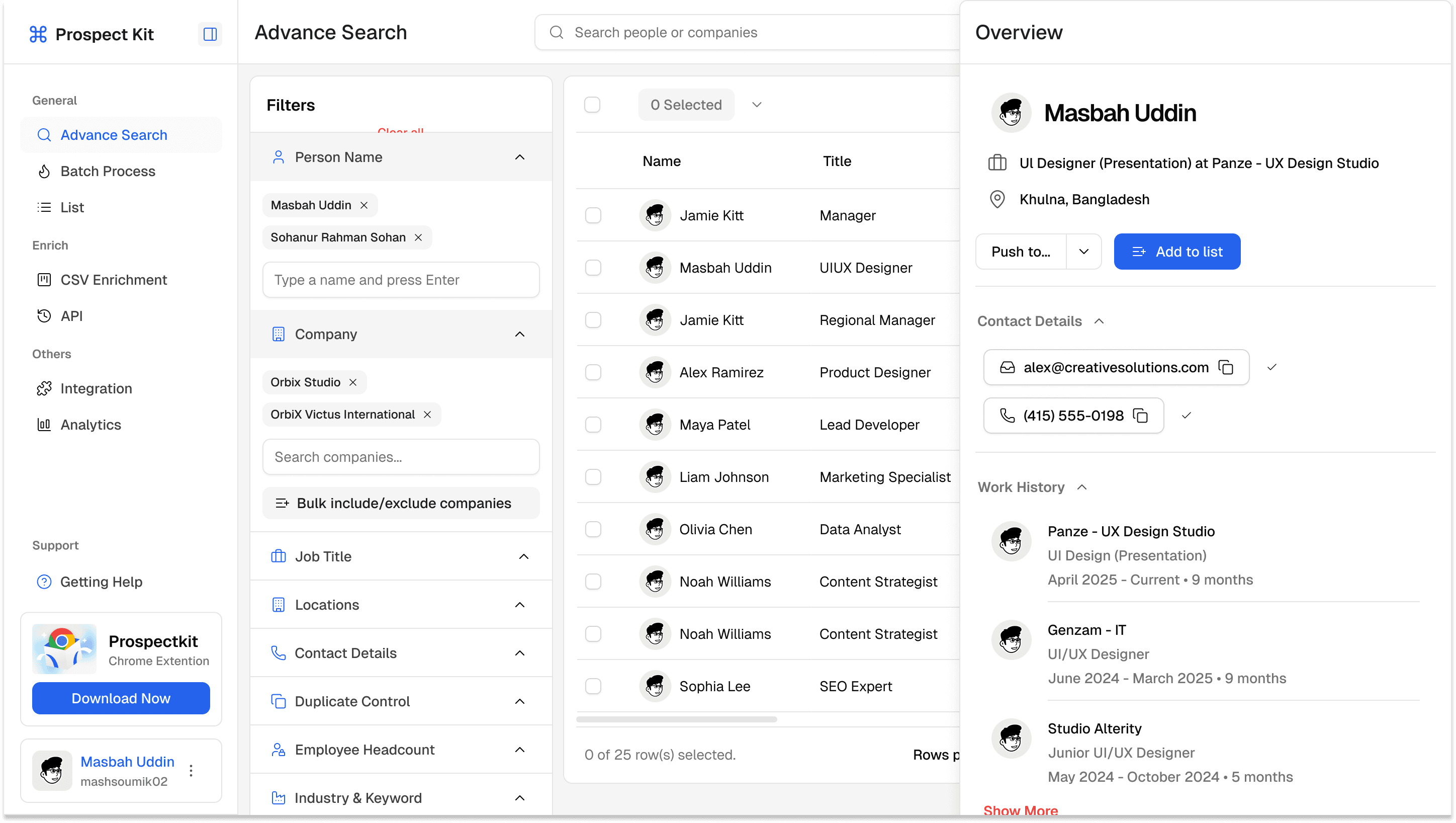
Why Teams Move Away From RocketReach
RocketReach works well for quick contact lookups. As teams grow, daily use starts to feel broken into pieces. Search-heavy tasks, manual lists, and exports add friction that slows momentum over time.
Workflow Limitations
Search-first steps stay disconnected, manual lists persist, workflows lack flow.
Daily Friction
Repeated searches, frequent exports, tool switching slow outreach and output.
Scaling Constraints
More users increase manual work, coordination slows, onboarding lags overall.
Why Teams Choose ProspectKit
ProspectKit attracts teams that want smoother days. Workflows stay clean. Actions stay short. Speed remains steady as teams grow.
Easier Daily Usage
Steps stay few. Actions feel clear. Navigation feels natural. New users start fast without heavy setup.
Smoother Prospecting
Prospecting follows logical steps. Hand-offs drop. Leads move forward without breaks or resets.
Built for Growth
Teams add users easily. Workflows adapt as goals change. Overhead stays low for long-term use.
How They Stack Up
Both tools support lead discovery. Daily results depend on ease, flexibility, and speed. Those factors shape most buying choices.
Ease of Use
ProspectKit keeps learning time short. Daily effort stays light. Teams adopt faster.
Flexibility
ProspectKit supports custom workflows and user control. RocketReach stays focused on fixed lookup use.
Speed
ProspectKit shortens time from search to outreach. Fewer steps raise output.
Is ProspectKit's Lead Generation Simpler?
ProspectKit keeps lead generation direct. Clear flow and fewer actions help teams act faster.
From Search to Action
Search stays clear. Next steps appear fast. Momentum carries through.
Less Manual Effort
Repetitive work drops. Copying shrinks. Cleanup work fades.
Easier Lead Handling
Leads stay organized. Ownership stays clear. Follow-ups stay simple.
Is ProspectKit Built for Scaling Teams?
ProspectKit supports growth without friction. Structure adjusts as teams expand.
Small Teams Growing Fast
Hiring happens quickly. Processes change often. Simple tools keep pace.
Sales-Focused Teams
Outbound teams gain speed. Reps keep autonomy. Goals stay aligned.
Lean Operations
Small teams run efficiently. Simple tools support steady output.
How Does ProspectKit Work?
ProspectKit connects discovery, filtering, and outreach in one flow. User control and speed guide each step.
Faster Prospecting
Actions stay quick. Waiting drops. Results show sooner.
Smoother Day-to-Day Use
Daily work stays consistent. Steps repeat with ease.
What Do Teams Ask?
Buyers ask clear questions before switching. Direct answers build confidence.
Is ProspectKit Right for Switching Teams?
Switching stays simple. Learning time stays short. Risk stays low.
When Does RocketReach Still Make Sense?
Individual researchers or light lookup use may still fit RocketReach.
Who Benefits Most From ProspectKit?
Growing teams, sales-driven groups, lean setups, and speed-focused teams gain the most.
Your Ideal Prospects Are Waiting
ProspectKit helps teams reach better-fit leads faster. Friction drops. Momentum builds. Daily work feels lighter and more focused.
Remove Daily Friction
Manual steps fade. Delays drop. Time returns to selling.
Move Faster With ProspectKit
Execution speeds up. Workflows stay clear. Effort drops and results follow.
FAQFrequently asked questions
Have questions about ProspectKit vs RocketReach? Here's how teams choose between smooth, team-focused workflows and search-heavy contact lookups.
Ready to Prospect with
Accurate Data and Real Results?
Find verified contacts, reach decision-makers faster, and turn outreach into a pipeline with ProspectKit.